Cat S vs Cat N Cars UK: Meaning, Risks & Buying Advice
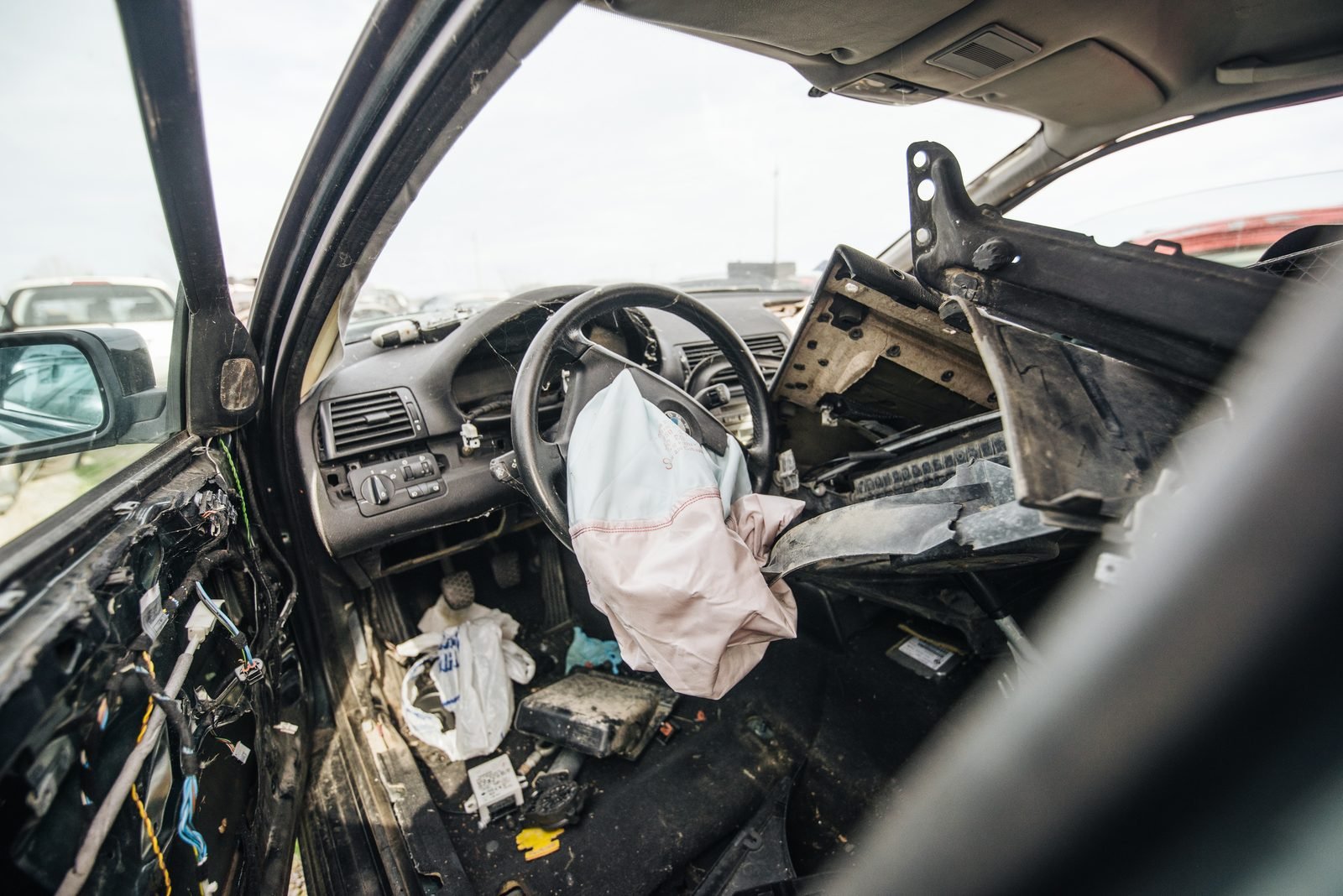
WHAT THE FOUR WRITE-OFF CATEGORIES MEAN
UK insurers classify damaged vehicles under four categories. Since October 2017 the labels have been A, B, S and N — before that, the old Category C and Category D covered roughly the same ground as S and N, so an older car may still show a C or D marker on a history check.
Category A is the most severe. The entire vehicle must be crushed and no parts may be reused — not even components that still work. Category B is nearly as strict: the body shell must be destroyed, although some mechanical and electrical parts can be salvaged for use in other vehicles. Neither a Cat A nor a Cat B car should ever return to the road as a complete vehicle. If you ever see one advertised for road use, walk away.
Category S and Category N are the repairable write-offs. A Cat S car suffered structural damage — the chassis, crumple zones or roof pillars, the parts designed to protect you in a crash — but it can be professionally repaired and returned to the road. A Cat N car suffered non-structural damage: the load-bearing structure was untouched, yet the repair bill still exceeded the car's pre-accident value, often because of extensive cosmetic damage, electrical faults or deployed airbags. Insurers typically write a car off when repairs reach around half of its market value, which is why even a modest shunt can total an older, low-value car.
CAT S VS CAT N: THE REAL DIFFERENCE
On paper, Cat N sounds much safer than Cat S, and it usually is — but the category describes the damage, never the quality of the repair. A Cat S car repaired properly by a competent bodyshop, with the structure jigged back to factory tolerances, can be a sound car. A Cat N car repaired badly can be the worse buy in practice.
Non-structural does not mean cosmetic only. Steering geometry, suspension alignment and braking systems can all be damaged in a Cat N write-off and still affect how safely the car drives. And because the old Vehicle Identity Check was scrapped, no government inspection verifies the repair quality before a Cat S car goes back on the road. That is exactly why your own checks matter more than the category letter.
HOW A WRITE-OFF AFFECTS INSURANCE AND RESALE
Two costs follow a write-off for life. First, insurance: you must declare the category to your insurer — failing to do so can void your cover — and many buyers find premiums are higher, with some insurers declining to quote at all or limiting comprehensive cover. Get real quotes before you commit to buying, not after. Second, resale: a Cat S or Cat N marker permanently depresses the car's value. That is why these cars sell at a discount in the first place, and you will hand that same discount to the next buyer when you sell. For a car you plan to keep for years, that matters less; for a car you will flip in twelve months, it can wipe out the saving.
Before you commit to any used purchase, it also pays to look beyond the asking price. Our True Cost tool breaks down the real running costs of popular models — see https://drivepedia.site/tools/true-cost/ford-focus-2024 for a worked example on Britain's best-selling used family hatchback.
THE CHECKS TO RUN BEFORE YOU BUY
1. Run a paid vehicle history check. A proper HPI-style check confirms the write-off category, the date it was recorded, outstanding finance, mileage discrepancies and whether the car has been stolen or scrapped. The category is not shown on the V5C logbook and will not appear in a free check, so pay for the full report.
2. Match the VINs. Check that the vehicle identification number stamped on the car matches the V5C and the history report, in every location it should appear. Mismatched or tampered VIN plates are a hallmark of cloned or "cut and shut" cars — two write-offs welded together, which is dangerous and illegal.
3. Ask for repair evidence. A straight seller of a Cat S or Cat N car should be able to show you photos of the original damage, invoices for the repair work and details of who did it. Vague answers here are a red flag.
4. Get an independent inspection. An AA or RAC pre-purchase inspection costs a fraction of the car's price and will spot poor panel gaps, paint overspray, filler and misaligned structure that a quick look-over misses. This is the single most valuable step in the whole process.
5. Look at the car yourself, properly. Uneven panel gaps, mismatched paint shades between panels, overspray on trims or under the bonnet, and filler that feels rough under the paint all suggest a rushed repair.
RED FLAGS AND WRITE-OFF SCAMS
Write-offs attract fraud, so know the classics. Category washing is the big one: a written-off car is registered abroad — Ireland is a common route — and then re-imported, so the UK write-off marker no longer follows it on domestic databases. An import with a suspiciously fresh registration deserves extra scrutiny. Undisclosed write-offs are simpler: a private seller may genuinely not know, or may hope you never check — run the history check yourself rather than taking anyone's word. And be wary of a fresh respray on a young car; ask what it was covering.
WHEN A CAT S OR CAT N CAR IS WORTH BUYING
A repaired write-off can be a smart buy in the right circumstances: you have verified the category and the damage, the repair evidence is solid, an independent inspection gives it a clean bill of health, you have confirmed insurance quotes you can live with, and you plan to keep the car long enough that the resale discount does not sting. Popular, well-understood models are the safest hunting ground — there is plenty of parts availability and buyer demand for cars like the Ford Focus (see our review at https://drivepedia.site/car/ford-focus-2024), the Vauxhall Corsa (https://drivepedia.site/car/vauxhall-corsa-2024) or the Volkswagen Golf (https://drivepedia.site/car/vw-golf-2020). Rare or complex cars with a write-off marker can be much harder to sell on.
If any link in that chain is missing — no repair history, no inspection, insurance quotes that make your eyes water — pay the extra for a clean-history car. The discount is only a bargain if the car is genuinely right.
FREQUENTLY ASKED QUESTIONS
Can a Cat S car be driven on UK roads?
Yes. Once a Cat S car has been professionally repaired and is roadworthy, it can be taxed, insured and driven normally. It must be declared to your insurer, and the category stays on its history permanently.
Is Cat N better than Cat S?
Generally, yes — the damage did not affect the car's structure. But the category only describes the original damage, not the quality of the repair, so a badly repaired Cat N car can be a worse buy than a well-repaired Cat S one. Always verify with an inspection.
Do I have to tell my insurer about a write-off?
Yes, absolutely. You must declare the write-off category when arranging cover. Failing to disclose it can invalidate your policy, leaving you uninsured in a claim.
Will a Cat S or Cat N car be worth less when I sell it?
Yes. The write-off marker permanently reduces the car's market value and narrows the pool of willing buyers. Buy at a discount that reflects this, and factor it into your ownership plans.
Can a Cat A or Cat B car ever return to the road?
No. A Cat A vehicle must be crushed entirely, and a Cat B vehicle's body shell must be destroyed — only some parts may be salvaged. Any complete car advertised with one of these categories is a serious red flag.
Can I get finance on a Cat S or Cat N car?
Some lenders will finance repaired write-offs, but many will not, and those that do may offer less favourable terms or require a larger deposit. Check with the lender before you agree to buy.
Image credit: Wrecked car in a salvage yard — photo by Shixart1985, via Wikimedia Commons, licensed CC BY 2.0.