Hyundai IONIQ 3 UK Orders Open: £18,495, 308-Mile Range
Hyundai Motor UK president Ashley Andrew says the response has been "extraordinary", with more customers registering their interest before launch than for any new Hyundai the company has introduced in Britain. With first cars arriving in UK retailers this month, he expects that interest to turn into orders quickly.
THE PRICES: FIVE TRIMS, ALL GRANT-ELIGIBLE
Every version of the IONIQ 3 qualifies for Band 1 of the Electric Car Grant, giving buyers the full £3,750 discount — a big deal for a car this affordable, because most sub-£20,000 EVs either miss the grant's top band or have no grant behind them at all.
The range opens with the Advance 42kWh at £18,495 OTR after the grant. Step up to the Advance 61kWh and the price is £21,995, followed by the Premium 61kWh at £23,695 and the Ultimate 61kWh at £26,195. The sportier N Line Evo tops the line-up at £28,195 after the grant is applied.
Anyone who reserved an IONIQ 3 before the order books opened does not miss out: Hyundai will let early reservation holders convert to a full order and receive the £3,750 grant instead of the £1,500 Hyundai Reservation Saving that was previously offered.
For buyers going down the finance route, Hyundai is offering the 61kWh Advance from £355 a month, with a £355 customer deposit over 48 months at 8.9% APR representative.
RANGE, BATTERIES AND CHARGING
Two battery sizes shape the line-up. The entry-level Advance pairs a 42 kWh battery with a 147 PS motor for up to 213 miles of WLTP range — plenty for daily commuting and school runs. The 61 kWh versions use a 135 PS motor and stretch the claimed range to up to 308 miles, which Hyundai describes as class-leading among small electric cars.
Both batteries support DC rapid charging, with a 10-to-80 per cent top-up taking around 30 minutes, backed up by 11 kW AC charging for home wallboxes. This is not a city-only runabout designed to live its life between the supermarket and the school gate: with 308 miles on the bigger pack, long motorway trips are firmly on the table.
DESIGN AND TECH: AERO HATCH, BIG BOOT
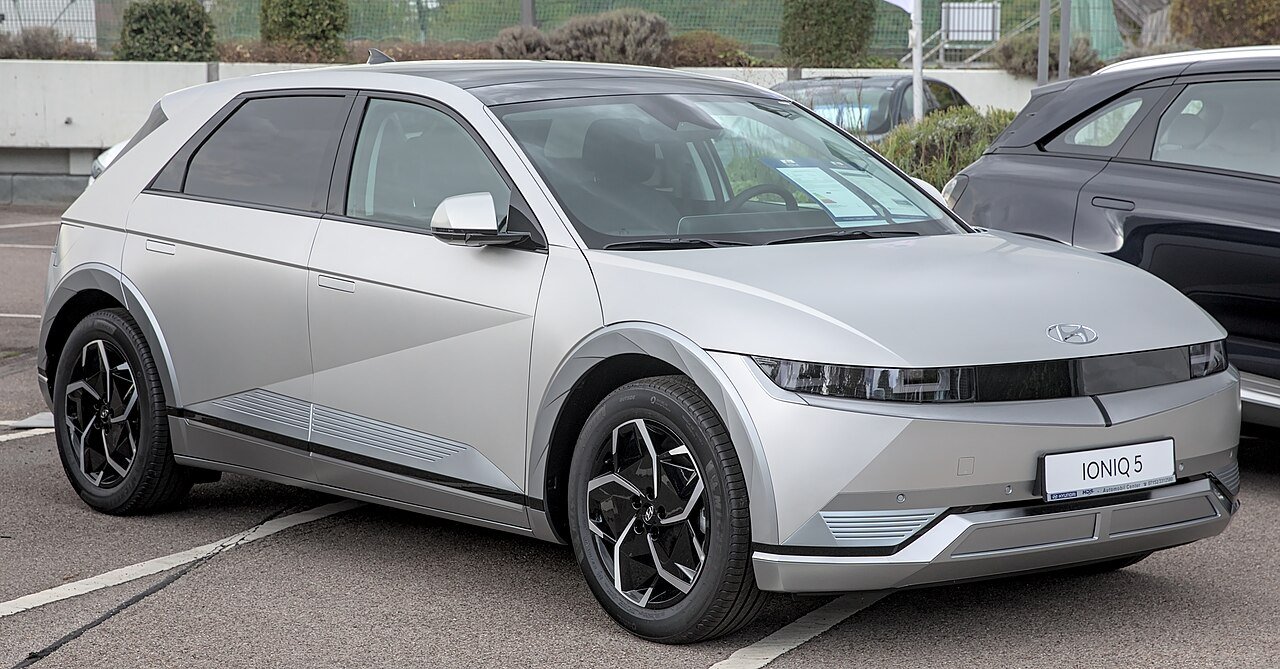
Hyundai calls the IONIQ 3's shape an "Aero Hatch", shaped by its Art of Steel design philosophy. The drag coefficient is just 0.263, and the pixel-style lighting that has become the IONIQ family's signature is present and correct.
Despite compact dimensions — 4,155 mm long, 1,800 mm wide, with a 2,680 mm wheelbase — the dedicated electric platform frees up generous interior space. The boot holds 441 litres including a 119-litre "megabox" hidden under the boot floor, rising to 1,213 litres with the rear seats folded. That is bigger than many cars from the class above.
Technology is a strong suit. The IONIQ 3 is the first Hyundai to run the company's new Pleos Connect infotainment system, built on Android Automotive OS, on a 12.9-inch central display (14.6 inches on the N Line Evo). Hyundai SmartSense driver assistance is standard, including adaptive cruise control with lane follow assist, blind spot monitoring and Highway Driving Assist 2 on higher trims. There is also Hyundai Digital Key 2 for smartphone-based keyless access, Plug & Charge capability, an integrated EV route planner and vehicle-to-load functionality that can power external devices.
WHY THE GRANT MATTERS
The IONIQ 3 now joins the KONA Electric as Hyundai's second model eligible for the full grant, and the pricing puts pressure on rivals. The Renault 5 E-Tech starts at £21,495 with the grant included, the BYD Dolphin G DM-i plug-in hybrid starts at £23,990, and upcoming rivals like the Volkswagen ID. Polo and Kia EV2 will need sharp prices of their own to compete.
The sub-£20,000 figure is psychologically important. At £18,495, the IONIQ 3 undercuts most electric rivals outright while offering a proper 213-mile range — and the 308-mile version at £21,995 covers the buyers who flinch at range anxiety.
WHAT IT MEANS FOR BUYERS
If you have been waiting for an affordable electric car that does not ask you to compromise on range, the IONIQ 3 deserves a test drive. The £18,495 entry price puts a grant-backed EV within reach of supermini money, while the £21,995 61kWh version delivers genuinely usable long-range motoring for barely more than a well-specced petrol supermini.
Watch the finance offer too: £355 a month with a £355 deposit for the long-range Advance is aggressive, and with first cars landing in retailers this month, waiting lists could build quickly given the pre-launch interest Hyundai is reporting.
Full specs and prices for Hyundai's electric range: https://drivepedia.site/car/hyundai-kona-2024
See also the Kia EV3, its platform sibling: https://drivepedia.site/car/kia-ev3-2025
Renault 5 E-Tech rival review: https://drivepedia.site/car/renault-5-e-tech-2025
FAQ
**How much is the Hyundai IONIQ 3 in the UK?** Prices start at £18,495 on the road for the Advance 42kWh, including the £3,750 Electric Car Grant. The 61kWh Advance costs £21,995, with the range topping out at £28,195 for the N Line Evo.
**What is the range of the Hyundai IONIQ 3?** Up to 213 miles WLTP with the 42 kWh battery, or up to 308 miles with the 61 kWh battery — the latter is claimed to be class-leading among small electric cars.
**Does the IONIQ 3 qualify for the full £3,750 Electric Car Grant?** Yes — every version of the IONIQ 3 qualifies for Band 1 of the grant, giving the full £3,750 discount.
**How fast does the Hyundai IONIQ 3 charge?** DC rapid charging takes the battery from 10 to 80 per cent in around 30 minutes, and AC charging runs at up to 11 kW.
**When will the first IONIQ 3 cars arrive in the UK?** Hyundai says the first cars are arriving in UK retailers during October 2026.
**What cars rival the Hyundai IONIQ 3?** Key rivals include the Renault 5 E-Tech, the upcoming Volkswagen ID. Polo and Kia EV2, plus the Cupra Raval and BYD Dolphin G DM-i.