Personal contract hire — PCH — is the simplest way to drive a brand-new car in the UK without ever owning it. You pick a car, agree a term and mileage, pay a fixed monthly rental, and hand the keys back. No balloon payment, no part-exchange haggling, no guessing its future value.
It is not the same as PCP. With PCP you buy the car on finance, with the option of a final balloon payment to keep it. With PCH you rent it: the car belongs to the leasing company from day one to the day you return it. That is also why PCH monthlies are usually lower: you only pay for depreciation and interest, never for the whole car.
How PCH works, step by step
First choose the car, term and annual mileage. Terms typically run from two to four years, and most funders offer anything from 12 to 48 months. Mileage usually starts at 5,000 miles a year — be honest about it. Then comes the initial rental: not a deposit, and you do not get it back — it is the first chunk of your payments brought forward, usually three, six or nine monthly payments. Adverts quote it as a profile, such as 6+23: six payments up front, then 23 monthly payments. A credit check comes first, and the best rates go to the strongest profiles.
Once the car arrives, you pay the same amount by direct debit every month — fixed for the whole term, so no interest-rate surprises and no repair roulette. Road tax is normally included for the full term, and many deals include breakdown cover. Insurance is almost always your responsibility, and the car must be serviced on schedule — or add a maintenance package, typically £20 to £50 a month, covering servicing, wear items, tyres and MOTs.
What does PCH cost?
As a rough guide on a 36-month deal at 8,000 miles a year: a small hatchback such as a Polo or Corsa leases from around £150 to £200 a month, a medium hatchback like a Golf or Focus from £200 to £300, a family SUV such as a Nissan Qashqai or Tiguan from £300 to £450, an electric car like a Tesla Model 3 or ID.3 from £350 to £500, and a premium saloon such as a BMW 3 Series or C-Class from £400 to £600.
Electric cars are where leasing often makes most sense. Strong residuals and low running costs keep rentals competitive — a Tesla Model 3 can lease for similar money to a petrol premium saloon yet cost far less to run. For business users, benefit-in-kind tax on a pure EV is still far lower than on petrol or diesel.
PCH vs PCP: which wins?
It depends on what you want at the end. If you may want to own the car one day, PCP is the right shape: higher monthlies, but a balloon payment at the end buys you the car. If you know you will want a new car in two or three years anyway, PCH is usually cheaper month to month and simpler at the end — hand it back and start again. Compare the gap with our PCP calculator first.
One warning applies to both: mileage. Every lease sets an annual limit, and going over it triggers excess mileage charges, typically a few pence to more than 10p per mile depending on the model. On a 10,000-mile overrun that can mean a four-figure bill at handover — set the allowance honestly at the start.
The handover: what they check
At term end, the leasing company collects the car and inspects it against the BVRLA fair wear and tear guide — the industry standard. Small stone chips and light scuffs are expected; kerbed alloys, dents, stained upholstery and missing keys are not, and each will be charged. Photograph it at delivery, keep it serviced, fix small damage before return day, and have both keys and the paperwork ready.
Is PCH right for you?
Leasing suits drivers who want a new car, fixed costs and no disposal hassle, with predictable mileage. It suits high-mileage drivers less well, and not anyone who wants to modify the car or end the deal early — early termination can be expensive, so read that clause before you sign.
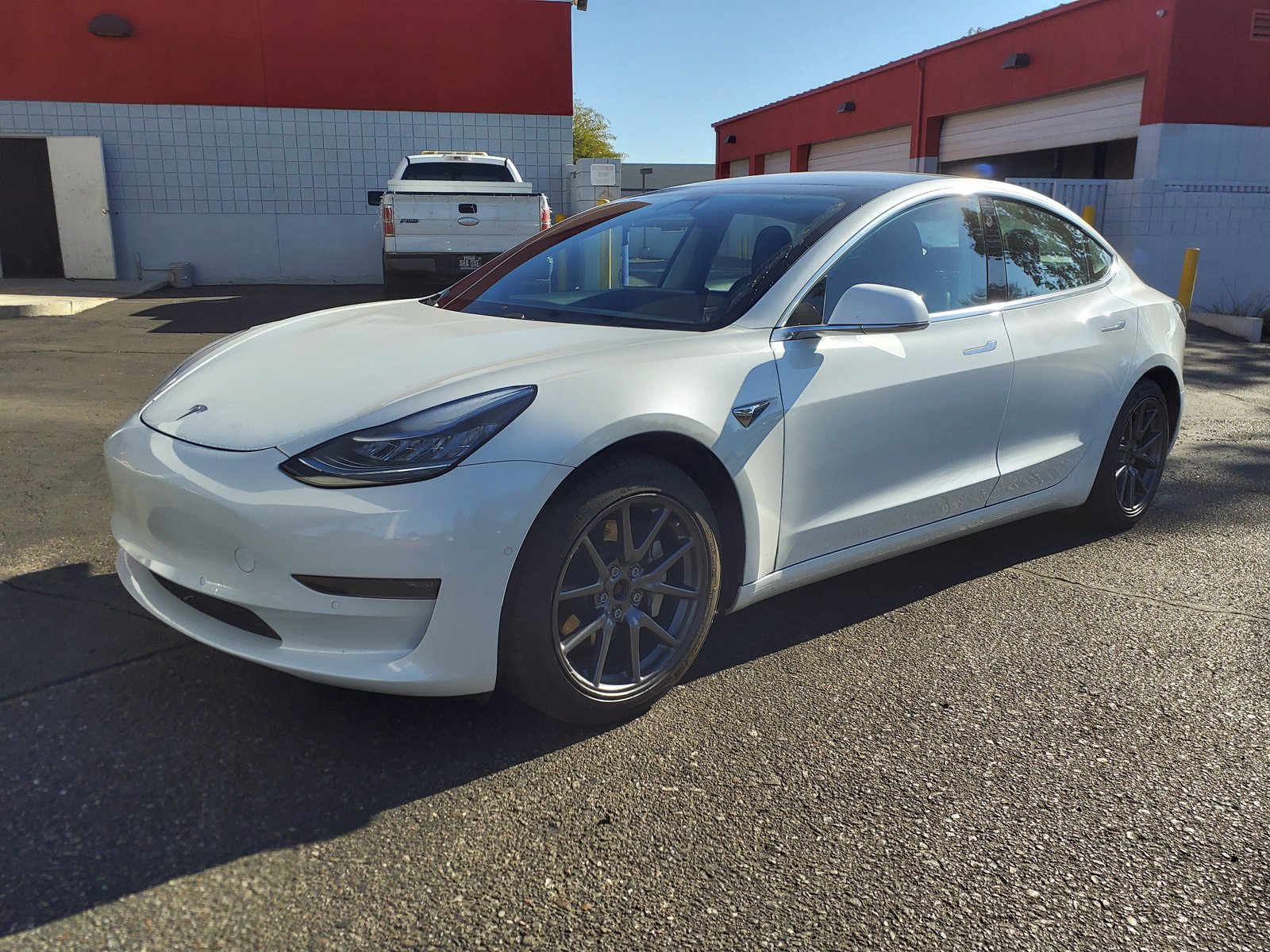
Sources: Carowl, Stoneacre, BVRLA. Photo: 2019 Tesla Model 3 Long Range by HJUdall, CC0, via Wikimedia Commons.
Frequently asked questions
Do I own the car on PCH?
No — it belongs to the leasing company for the whole term. You pay to use it, then hand it back, unlike PCP, where a final balloon payment buys you the car.
What deposit do I need for PCH?
There is no deposit. You pay an initial rental instead — typically three, six or nine monthly payments — which you do not get back. No-deposit deals exist, at higher monthlies.
What happens at the end of a PCH deal?
The leasing company collects it and inspects it against the BVRLA fair wear and tear guide. You pay for excess damage and miles, then walk away — or start a new lease.
What if I go over my mileage?
You pay excess mileage charges, typically a few pence to more than 10p per mile. Set your mileage honestly at the start — it is far cheaper than paying at handover.