Audi Quattro 1985 review
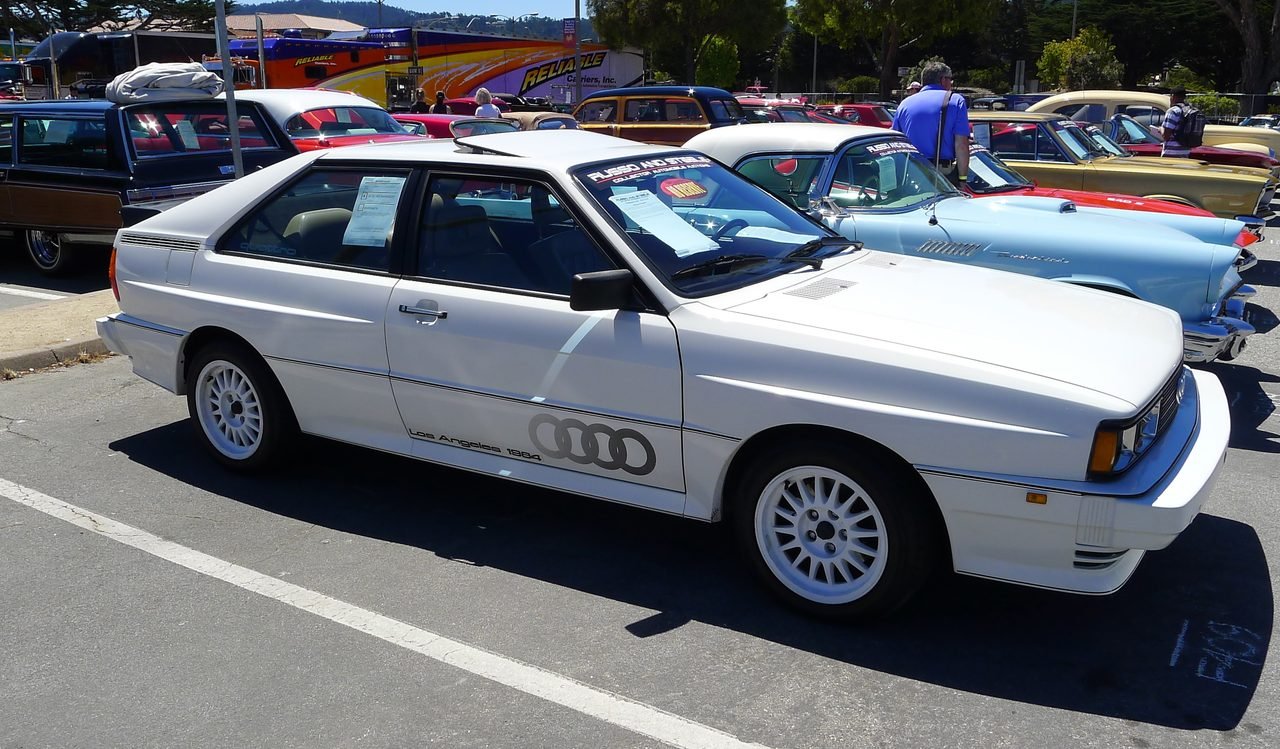
Photo: Ross (CC BY-SA 2.0), via Wikimedia Commons
Overview
The car that changed rallying and road cars forever. When the original ''Ur'' Quattro appeared at the 1980 Geneva Motor Show, its permanent four-wheel-drive system was a revelation — and its domination of Group B rallying made it a legend. The 1985 model year brought a significant facelift: the engine grew to 2.2 litres with a smaller, electronically controlled turbo for near-identical power with far less lag, and a Torsen centre differential replaced the old manual-locking unit.
Driving a Quattro is an exercise in traction. The five-cylinder turbo delivers its 200PS with a charismatic off-beat warble and old-school turbo lag, then the quattro system simply refuses to let go. It feels unstoppable in the wet in a way few modern cars can match, even if the handling is more point-and-squirt than delicate.
Check the turbo for smoke and lag-free boost, listen for whining differentials, and test every electrical item — 1980s Audi electrics can be temperamental. Bodywork should be inspected for accident damage and corrosion around the arches and sills. Service history from a marque specialist is highly desirable, as is evidence of recent cambelt and turbo work.
UK price from: £45,000
Specifications
| Engine | 2.1L 5-cylinder turbo petrol |
| Power | 200 PS (197 bhp) |
| 0-60 mph | 7.0 seconds (approx.) |
| Top speed | 137 mph |
| Production years | 1980-1991 |
| Kerb weight | 1,290 kg |
| Transmission | 5-speed manual |
| Drive | All-wheel drive |
| Fuel economy | 22 mpg (combined, approx.) |
| Length | 4,404 mm |
Features
- Permanent quattro all-wheel-drive system
- 2.1L five-cylinder turbocharged engine
- Torsen torque-sensing centre differential (1985 facelift)
- Five-speed manual gearbox
- Flared wheelarches and boxy coupe styling
- Sports seats in velour or leather
- Bosch ABS brakes
- Electric windows and mirrors
Common parts & prices
| Part | Price (GBP) | Notes |
|---|---|---|
| Turbocharger (reconditioned) | £649.99 | Exchange unit; check oil feed pipes at the same time |
| Front brake pads (set) | £49.99 | OEM quality; front axle |
| Timing belt kit | £129.99 | Belt, tensioner and rollers; critical service item |
| Oil filter | £9.99 | For 5-cylinder turbo engines |
| HT lead set | £59.99 | Five leads; replace with plugs |
| Clutch kit | £189.99 | Cover, disc and release bearing; gearbox-out job |
Pros
- A genuine motorsport and engineering icon
- Astonishing all-weather traction even by modern standards
- Charismatic five-cylinder turbo soundtrack
- Values of good cars continue to rise
Cons
- Turbo and drivetrain repairs are expensive
- 1980s electrics can be troublesome
- Heavy fuel consumption and high running costs
- Finding an honest, unmodified car takes patience