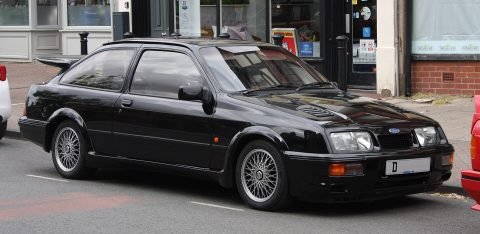
Ford Puma 2020 review

Overview
The 2020 Ford Puma marked the return of a beloved Ford nameplate in a very different guise: instead of the beloved 1990s coupe, it was a Fiesta-based small crossover built in Romania and pitched squarely at Britain's best-selling segment. Going on sale in the UK in January 2020 with on-the-road prices from £20,845, it arrived just as Ford axed the Fiesta from most European factories' plans and positioned the Puma as the brand's volume family car. The launch range comprised Titanium, ST-Line and ST-Line X trims (plus short-lived First Edition models), and the timing could not have been better judged: the Puma went on to be crowned What Car? Car of the Year for 2020, beating the Skoda Scala, Range Rover Evoque and Tesla Model 3 to the overall title.
Under the bonnet, Ford kept things refreshingly simple. Launch cars offered a 1.0-litre three-cylinder EcoBoost petrol in three guises: a non-mild-hybrid 125PS, a 125PS mild-hybrid (mHEV) and a 155PS mHEV, all driving the front wheels through a sweet-shifting six-speed manual. The 155PS mHEV is the pick of the bunch, reaching 62mph in 8.9 seconds with a 124mph top speed, while WLTP economy stretches to 51.4mpg with CO2 as low as 124g/km on some trims. The 48-volt mild-hybrid hardware adds torque infill rather than electric-only running, so it behaves like a normal petrol with a slightly healthier mid-range. The seven-speed dual-clutch automatic and the 200PS 1.5-litre Puma ST arrived later, so every 2020-built car is a manual.
Practicality is where the Puma scored its cleverest hit. The 456-litre boot is competitive for the class, but the hidden party trick is the MegaBox: a deep 80-litre washable compartment under the boot floor with its own drain plug, big enough to swallow wellies, a pushchair or items up to 115cm tall. Rear legroom is snug for taller passengers, a common complaint, but up front the cabin is pure Fiesta - raised driving position, 8-inch SYNC 3 touchscreen, and lumbar massage seats standard on Titanium that Ford claimed as a segment first. Safety is a genuine strength: Euro NCAP awarded the Puma five stars in December 2019, with 94 per cent for adult occupants and 84 per cent for children, and every car gets autonomous emergency braking, lane-keeping aid and post-collision braking as standard.
As a used buy, the 2020 Puma is one of the smartest small-crossover choices in Britain, with typical prices now running from roughly £8,000 to £16,000 depending on trim, mileage and engine. Insurance groups sit in the low-to-mid teens (group 12E for the 125PS Titanium, group 14-15 for most 155PS cars), keeping premiums sensible. Buyers should check the DVSA recall history: early cars were covered by recalls for driver airbag retention springs (R/2020/045), 48-volt hybrid battery connections on mHEV models (R/2020/248 and R/2021/008), and a later engine oil separator issue (R/2022/171) - a main dealer can confirm all work is done. Because the Puma shares its platform and most mechanical parts with the Fiesta, service parts are cheap and plentiful, and any independent garage will know the 1.0 EcoBoost inside out.
UK price from: £20,845
Specifications
| Engine | 999cc 3-cylinder turbocharged petrol with 48V mild hybrid (mHEV) |
| Power | 155PS (153bhp) at 6,000rpm |
| Torque | 240Nm at 1,600-4,000rpm |
| 0-62 mph | 8.9 seconds |
| Top speed | 124mph |
| Transmission | 6-speed manual |
| Drive | Front-wheel drive |
| Fuel economy | 51.4mpg (WLTP combined) |
| CO2 emissions | 124-127g/km (WLTP) |
| Boot space | 456 litres including 80-litre MegaBox |
| Kerb weight | 1,280kg |
| Warranty | 3 years / 60,000 miles (as sold new) |
Features
- 8-inch SYNC 3 touchscreen with Apple CarPlay, Android Auto, Bluetooth and satellite navigation
- 12.3-inch digital instrument cluster on ST-Line and ST-Line X (analogue dials on Titanium)
- Lumbar massage front seats standard on Titanium - claimed segment first
- B&O 10-speaker premium audio and 18-inch alloys on ST-Line X; hands-free power tailgate on First Editions
- Selectable drive modes: Normal, Eco, Sport, Slippery and Trail
- Quickclear heated windscreen and wireless phone charging on higher trims
- Full LED headlamps, privacy glass and sports suspension on ST-Line X
- Ford Co-Pilot360 safety kit standard: pre-collision assist with autonomous emergency braking, pedestrian and cyclist detection, lane-keeping aid and intelligent speed limiter
Common parts & prices
| Part | Price (GBP) | Notes |
|---|---|---|
| Front brake pads (set) | £38 | Shared with Mk8 Fiesta; pattern parts widely available |
| Front brake discs (pair) | £72 | 280mm vented; check whether 15in or 16in wheels fitted |
| Oil filter | £9 | Annual service item; use Ford-spec 5W-20 oil for 1.0 EcoBoost |
| Cabin pollen filter | £14 | Behind glovebox; 10-minute DIY job on all trims |
| Front wiper blades (pair) | £18 | Flat-blade type; measure before ordering |
| 48V mild-hybrid auxiliary battery | £165 | mHEV only; main 12V battery is a standard AGM type around £95 |
Pros
- Class-leading fun-to-drive handling with a slick six-speed manual gearbox
- Clever MegaBox boot adds a washable 80-litre hidden compartment
- Frugal 1.0 EcoBoost mild-hybrid engines with up to 51.4mpg WLTP
- Five-star Euro NCAP rating with generous standard safety kit
- What Car? Car of the Year 2020 - strong residuals and easy resale
Cons
- Rear legroom is snug for taller adults behind taller drivers
- Cabin materials feel plain for the price in lower trims
- No automatic option on 2020 models - the 7-speed DCT came later
- Real-world economy of the 155PS version rarely matches the headline figure
Frequently asked questions
What is the Ford Puma MegaBox?
Which 2020 Puma engine should I buy: 125PS or 155PS?
Was the Puma ST available in 2020?
What recalls affect the 2020 Ford Puma?
Is a used 2020 Ford Puma a good buy?
Owner reviews
Write your review
Related cars
Ford Focus 2024
Ford Fiesta 2023
Ford Kuga 2024