Morris Minor 1960 review
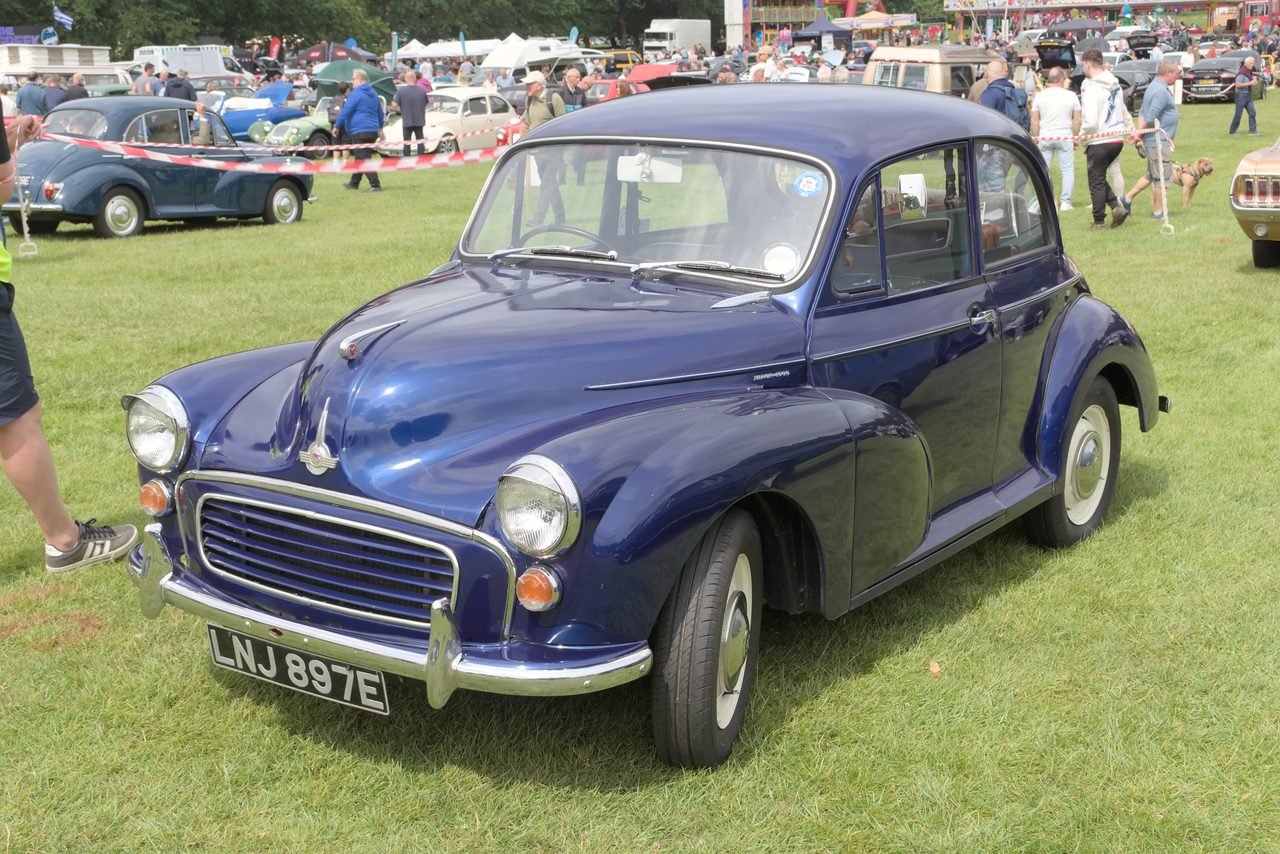
Photo: Aethonatic (CC0 1.0 Public Domain), via Wikimedia Commons
Overview
Few cars have burrowed as deep into Britain's affections as the Morris Minor, the Alec Issigonis-designed small car that became the country's first million-seller in 1961. By 1960 it had settled into its long-running Minor 1000 form, powered by the 948cc BMC A-series engine shared with everything from the Austin A35 to the Austin-Healey Sprite. Affectionately known as the Moggie, it remains one of Britain's best-supported classics, with a huge spares and club scene.
Behind the wheel, the Minor belongs to a slower age. Thirty-seven horsepower means 0-60 mph takes around 31 seconds and top speed is roughly 75 mph, so you plan journeys at the Minor's own unhurried pace — at 50-55 mph it will potter along happily all day with the little A-series humming. The rack-and-pinion steering is a genuine delight, precise and full of feel, and the supple ride makes this a car you savour rather than hustle.
Buy on bodywork, not mechanics, because almost every oily part is still available new and cheap. Rust is the real enemy: check the sills, floor pans, chassis legs, inner and lower wings, door bottoms and boot floor, and make sure old repairs were welded properly rather than hidden under underseal. The A-series is tough — listen for bottom-end rumble and smoke on start-up — and check the gearbox synchromesh and drum brakes work as they should. A solid, MOT'd saloon from around £7,950 is the sweet spot for hassle-free classic motoring.
UK price from: £7,950
Specifications
| Engine | 948cc BMC A-series inline-four (OHV) |
| Power | 37 bhp @ 4,750 rpm |
| 0-60 mph | 31.3 secs (approx.) |
| Top speed | 75 mph (approx.) |
| Production years | 1948-1971 |
| Gearbox | 4-speed manual |
| Drive | Rear-wheel drive |
| Kerb weight | 775 kg (approx.) |
Features
- 948cc BMC A-series inline-four, 37 bhp at 4,750 rpm
- Four-speed manual gearbox, synchromeshed on the top three ratios
- Rack-and-pinion steering, precise and full of feel for its era
- Torsion-bar front / semi-elliptic leaf rear suspension
- Wraparound rear window and one-piece curved windscreen (Minor 1000 update)
- Lockheed hydraulic drum brakes on all four wheels
- Shared parts-bin engineering with Austin A35 and Healey Sprite keeps spares plentiful
- Roomy four-seat cabin with a genuinely usable boot
Common parts & prices
| Part | Price (GBP) | Notes |
|---|---|---|
| Front brake shoes (set) | £24.99 | Standard 7in drum brake shoes; check and adjust the all-drum system annually |
| Clutch kit (3-piece) | £89.99 | Disc, cover and release bearing; the A-series clutch is a straightforward DIY job |
| Water pump | £34.99 | Bolt-on replacement for the 948cc A-series; fit a new thermostat at the same time |
| Complete exhaust system | £109.99 | Mild-steel system, front pipe to tailpipe; stainless options cost more |
| Kingpin kit | £54.99 | Steering upright bushes and pins; a classic Minor wear point — grease regularly |
Pros
- Superb spares availability — almost everything is still made new
- Simple, DIY-friendly mechanics; cheap to maintain and insure
- Lovely steering feel and a gentle, honest character
- A huge, friendly owners' club network across the UK
Cons
- Rust is endemic: sills, floors, chassis legs and wing bottoms all suffer
- Leisurely performance — 0-60 takes about 31 seconds, so motorways need patience
- All-drum brakes require a firm push by modern standards
- Suspension and steering joints need regular greasing or they wear quickly
Frequently asked questions
What engine does a 1960 Morris Minor have?
How fast is a 1960 Morris Minor?
Are Morris Minor parts easy to find?
Where does a Morris Minor rust?
How much does a 1960 Morris Minor cost?
Owner reviews
Write your review
Related cars
BMW 3 Series 2024
Audi A4 2024

Tesla Model 3 2024