Nissan Juke 2022 review
Overview
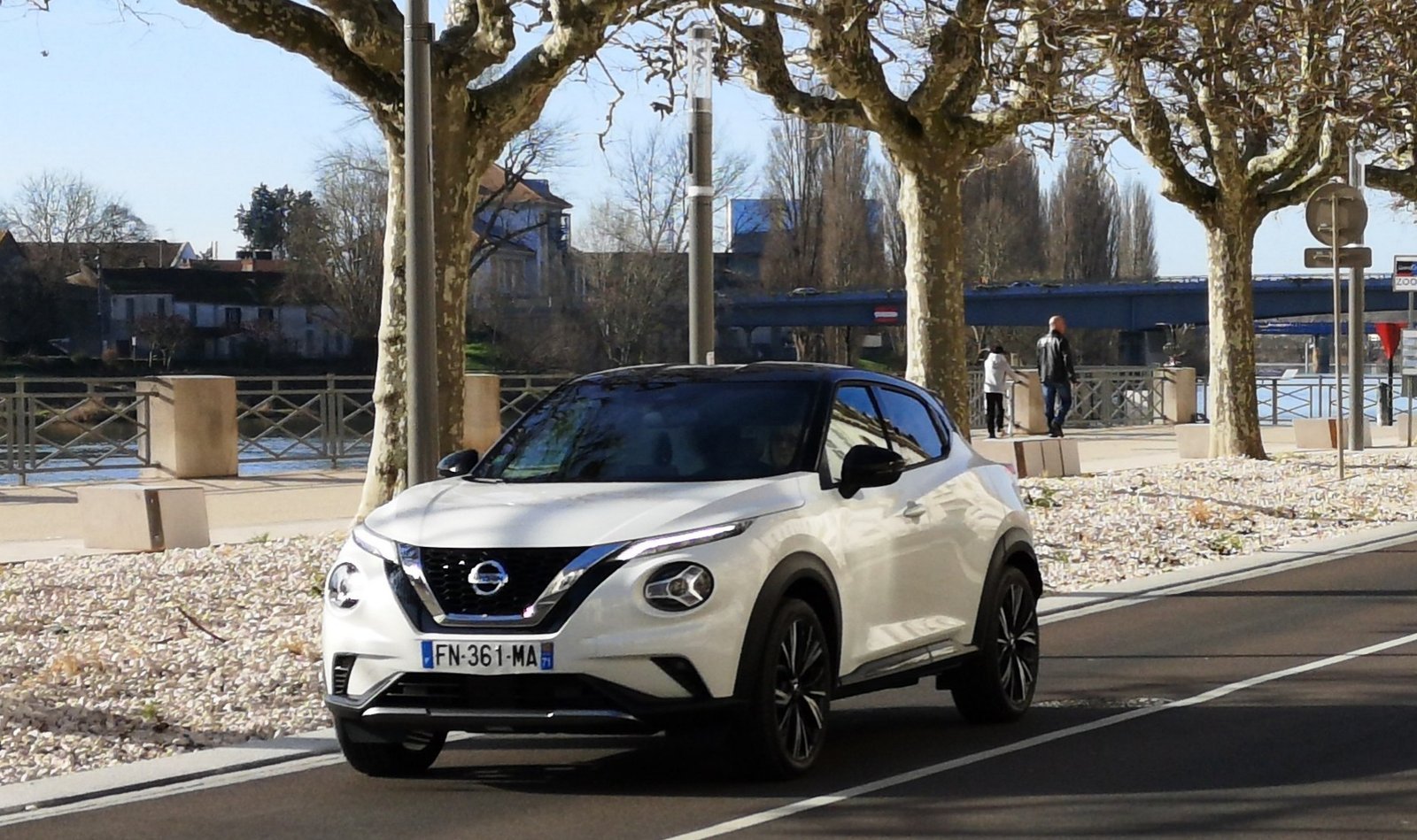
The 2022 Nissan Juke is the F16 second-generation car — and 2022 brought its biggest news: the new Juke Hybrid. Built in Sunderland, the hybrid pairs a 94PS 1.6-litre petrol engine with a 49PS electric motor for a combined 143PS, making it the most powerful Juke in the range. Prices in June 2022 ran from £20,420 for the Visia 1.0 DiG-T manual to £30,150 for the 1.6 Hybrid Tekna+.
The established 1.0 DiG-T 114 three-cylinder turbo petrol continues alongside it: 114PS, 200Nm, a six-speed manual or seven-speed DCT, 0–62mph in 10.7 seconds as a manual, and WLTP economy of 47.9–48.7mpg. The hybrid returns 55.4–60.1mpg WLTP with 114g/km of CO2, and comes with e-Pedal Step one-pedal driving, a new grille and Hybrid badging, and 19-inch Aero alloys on Tekna+. All UK Jukes are front-wheel drive — no 4x4 is offered.
The boot holds 422 litres on petrol cars — bigger than the old F15 Juke's and on a par with a Ford Puma — though the hybrid's 1.2kWh battery eats into that, leaving around 350 litres. Trims span Visia, Acenta, N-Connecta, Tekna and Tekna+, with the hybrid offered from N-Connecta up. Insurance groups are cheap (12E–14E), Euro NCAP gave the F16 five stars in 2019, and Nissan's service schedule runs every 18,000 miles or 12 months.
As a used buy, 2022-reg examples now sit around £12,000–£18,000: petrol manuals at the low end, hybrids from about £13,000. The hybrid's Alliance-shared system (Nissan engine, Renault hybrid hardware, also used in the Captur E-Tech) is still young for long-term verdicts, but MOT data shows 2022 cars at a 92% first-pass rate. Both DVSA-relevant recalls on the F16 (a rear seatback latch and a driver's airbag fold issue) affect 2019–2020 builds, so a 2022 car should be clear — check the DVSA/Nissan VIN checker anyway. Rivals include the Renault Captur, Peugeot 2008, Ford Puma and Toyota Yaris Cross.
UK price from: £20,420
Specifications
| Engine | 1.0L 3-cyl turbo petrol / 1.6L petrol + 49 PS electric motor (1.2 kWh) |
| Power | 114 PS / 143 PS combined (hybrid) |
| Torque | 200 Nm (petrol); 148 Nm (hybrid engine only) |
| 0-62 mph | 10.7 s (manual) / 11.8 s (DCT) / 10.1 s (hybrid) |
| Top speed | 112 mph (petrol); 103 mph (hybrid) |
| Transmission | 6-speed manual / 7-speed DCT / hybrid auto |
| Drive | Front-wheel drive only |
| Fuel economy (WLTP) | 47.9–48.7 mpg (manual); 55.4–60.1 mpg (hybrid) |
| CO2 emissions (WLTP) | 131–133 g/km (petrol); 114–115 g/km (hybrid) |
| Boot space | 422 litres (petrol); c. 350 litres (hybrid) |
| Kerb weight | c. 1,199 kg (petrol) / c. 1,327 kg (hybrid) |
| Insurance group | 12E–14E |
| Euro NCAP | 5 stars (2019 test) |
Features
- 1.6 Hybrid: 143PS combined output, 55.4–60.1mpg WLTP, 114g/km CO2
- 1.0 DiG-T 114: three-cylinder turbo petrol, 6-speed manual or 7-speed DCT
- e-Pedal Step on the hybrid: one-pedal driving down to around 3mph
- 8-inch NissanConnect touchscreen with Apple CarPlay and Android Auto (Acenta up)
- Intelligent Emergency Braking with pedestrian/cyclist recognition as standard range-wide
- TomTom sat-nav, keyless entry and climate control on N-Connecta and above
- Bose premium audio, heated seats and heated windscreen on Tekna
- 360-degree camera and Safety Shield pack on Tekna and above
Common parts & prices
| Part | Price (GBP) | Notes |
|---|---|---|
| Front brake pads (set) | £34.99 | Pattern part |
| Oil filter | £9.99 | |
| Engine air filter | £14.99 | |
| Cabin pollen filter | £12.99 | |
| Wiper blades (pair) | £19.99 | 24in/16in flat blades |
| 12V battery | £89.99 | 027-type; hybrid-safe on hybrid models |
Pros
- The hybrid brings mid-50s mpg with no plug-in hassle — ideal for urban commuters and ULEZ-compliant
- Compact 4.21m footprint with a high seating position — easy to park in UK towns
- Five-star Euro NCAP 2019 with auto emergency braking standard on every trim
- Cheap insurance groups (12E–14E) and fixed-price Nissan servicing
- The 422-litre boot (petrol) is a big step up from the old Juke
Cons
- The 1.0-litre engine feels breathless with four adults aboard; the DCT is notably slower off the line
- The hybrid loses around 70 litres of boot space and costs £1,730 more than the equivalent auto petrol
- Hard cabin plastics, and Tekna+ pricing pushed into Qashqai territory when new
- Rear legroom and headroom are tight for taller adults