Audi Q2 2024 review
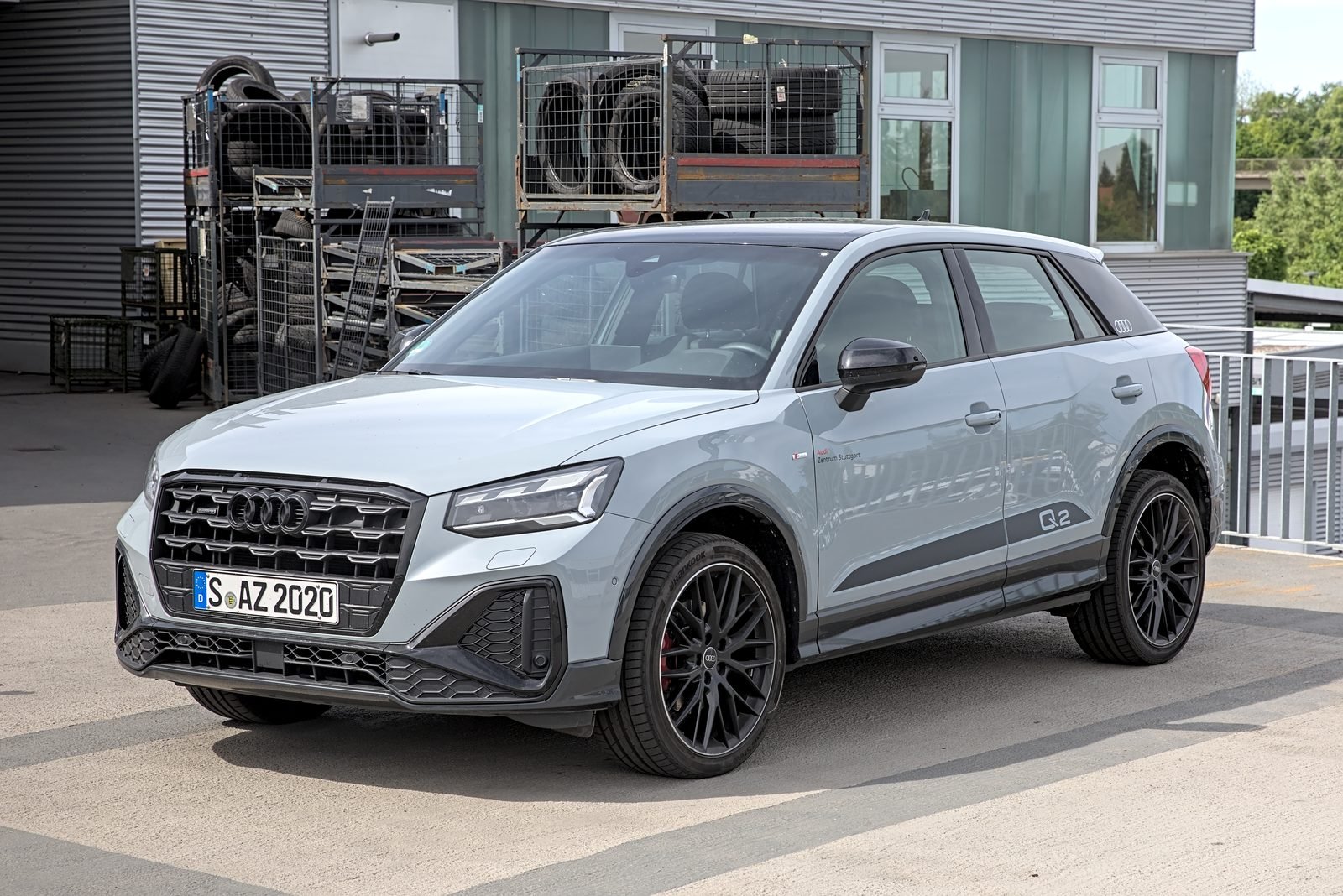
Photo: Alexander Migl (CC BY-SA 4.0), via Wikimedia Commons
Overview
The Audi Q2 is the smallest SUV Audi sells in Britain, and by 2024 it had settled into a comfortable niche as the premium alternative to mainstream compact crossovers. Rivals include the Mini Countryman and DS 3 alongside more conventional fare like the Volkswagen T-Roc — with which the Q2 shares much of its underbody engineering — yet only the Q2 and the T-Roc's premium badge carries the four rings. The facelifted model, on sale since 2020, kept the distinctive polygonal styling and added LED headlamps as standard.
The 2024 UK range centred on two petrol engines in three trims: Sport, S line and Black Edition. The entry-level 30 TFSI pairs a 1.0-litre three-cylinder turbo with 116 PS to a six-speed manual gearbox, reaching 62 mph in 10.5 seconds and officially returning up to 47.9 mpg. The 35 TFSI, which accounts for the majority of UK sales, uses a 1.5-litre four-cylinder with cylinder-on-demand technology producing 150 PS and 250 Nm, cutting the sprint to 8.6 seconds while still managing up to 48.7 mpg on the combined cycle.
Prices started from £29,765 for the 30 TFSI Sport manual, rising through S line and the black-trimmed Black Edition. Every version gets five seats, a 405-litre boot that grows to 1,050 litres with the rear seats folded, and a five-star Euro NCAP safety rating from the original 2016 test. The interior is recognisably Audi: cleanly laid out, well screwed together, and available with the excellent 12.3-inch Virtual Cockpit digital instrument display as an option.
Running costs are typical for the premium segment. Insurance groups start around group 20 for the 35 TFSI, road tax is £200 a year, and Audi's three-year/60,000-mile warranty is standard. WhatCar notes the Q2 is predicted to depreciate more slowly than most rivals, which keeps monthly PCP finance surprisingly competitive against the cheaper-on-paper Ford Puma or Hyundai Kona.
Related reviews: Audi A1 2024 review · Audi A3 2024 review · Audi A4 2024 review
UK price from: £29,765
Specifications
| Engine | 1.5L 4-cylinder turbo petrol (35 TFSI) |
| Power | 150 PS (147 bhp) |
| Torque | 250 Nm |
| 0-62 mph | 8.6 seconds (35 TFSI); 10.5 seconds (30 TFSI) |
| Top speed | 135 mph (35 TFSI); 122 mph (30 TFSI) |
| Transmission | 6-speed manual / 7-speed S tronic automatic |
| Drive | Front-wheel drive |
| Fuel economy | 44.1-48.7 mpg combined (WLTP) |
| CO2 emissions | 132-145 g/km |
| Boot space | 405 litres (1,050 litres seats down) |
| Kerb weight | 1,305 kg (minimum) |
| Warranty | 3 years / 60,000 miles |
| Insurance group | Group 20 (35 TFSI) |
Features
- 1.0-litre 30 TFSI (116 PS) or 1.5-litre 35 TFSI (150 PS) petrol engines
- Cylinder-on-demand technology on the 35 TFSI to save fuel at light loads
- Six-speed manual or seven-speed S tronic dual-clutch gearbox
- Three UK trims: Sport, S line and Black Edition
- Full-LED headlamps fitted as standard
- MMI infotainment with smartphone integration (Virtual Cockpit optional)
- Five-star Euro NCAP rating with pedestrian detection and cruise control
- 405-litre boot (1,050 litres with rear seats folded) and 50-litre fuel tank
Common parts & prices
| Part | Price (GBP) | Notes |
|---|---|---|
| Front brake pads (set) | £44.99 | Pattern part; OEM specification |
| Oil filter | £9.99 | Fits both 1.0 and 1.5 TFSI engines |
| Cabin pollen filter | £14.99 | |
| Front wiper blades (pair) | £21.99 | 600mm/475mm fitment |
| 12V battery | £89.99 | EFB type for start-stop |
| Engine air filter | £15.99 |
Pros
- Premium badge with slower predicted depreciation than mainstream rivals
- The 35 TFSI is a sweet spot: 8.6-second pace with up to 48.7 mpg
- Solid, well-built interior that feels a class above the price
- Compact 4.2-metre length makes it easy to place in town and park
- 405-litre boot is slightly bigger than an Audi A3 Sportback's
Cons
- Audi pricing puts it up against larger mainstream family SUVs
- Ride is on the firm side, especially on S line's larger alloys
- Rear-seat legroom is merely adequate for adults
- Cabin design and some tech feel a generation behind newer rivals