BMW iX 2024 review
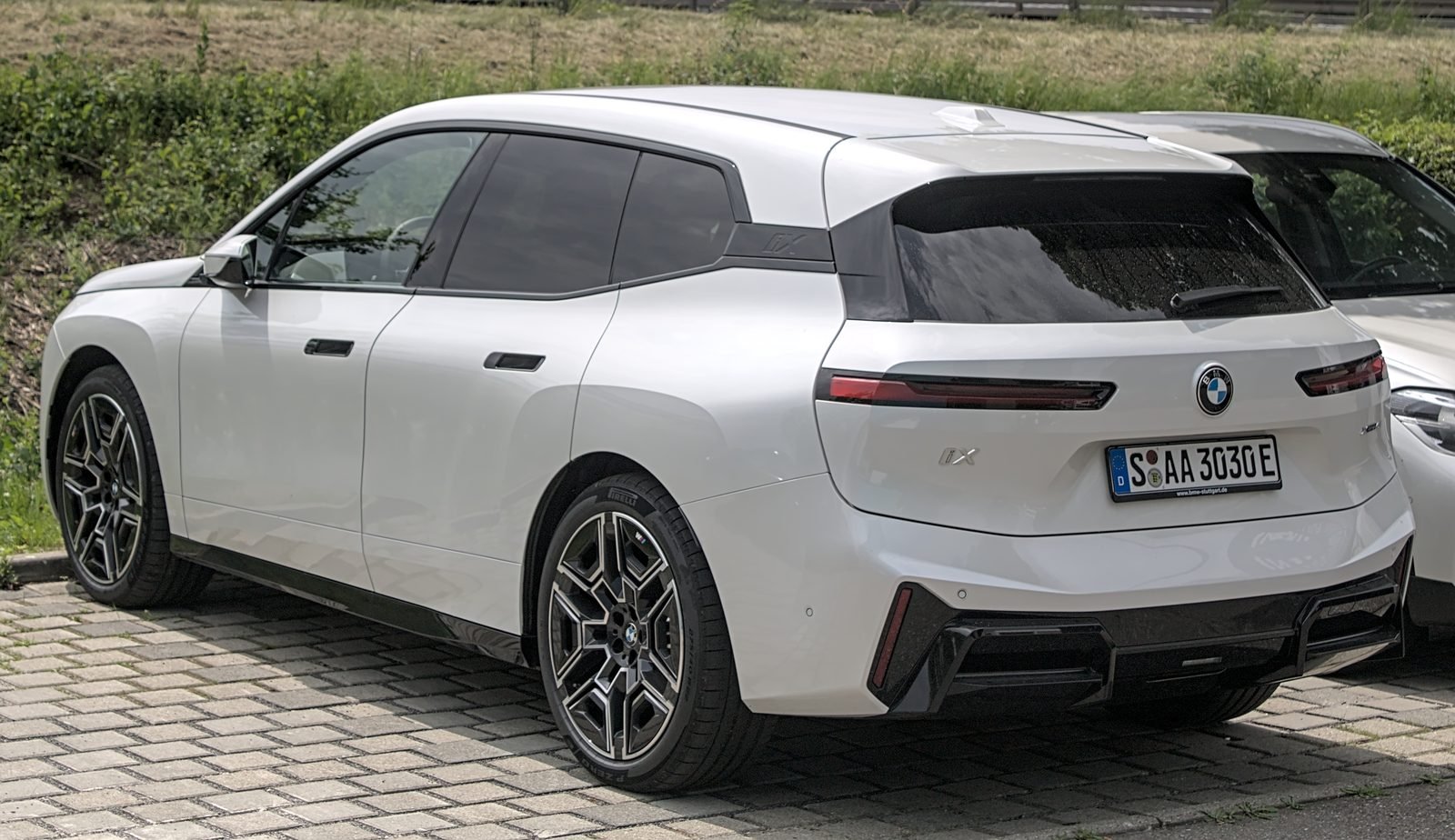
Photo: Alexander Migl (CC BY-SA 4.0), via Wikimedia Commons
Overview
The BMW iX is the Munich firm’s electric flagship, and the pre-facelift model sold in the UK from 2021 until the 2025 update is the version most British buyers will now find on the used market. Designed from the ground up as an electric car rather than adapted from a combustion model, it was BMW’s statement that an EV could be big, luxurious and genuinely long-legged. New prices started from around £70,000 for the xDrive40 Sport, pitching it against the Audi Q8 e-tron, the Mercedes EQE SUV and the Tesla Model X.
British buyers had a simple choice of powertrains. The xDrive40 pairs two motors for 326 bhp with a 76.6 kWh battery (73 kWh usable), giving an official WLTP range of up to 257 miles and a 6.1-second 0–62 mph sprint. The xDrive50 adds a bigger 111.5 kWh battery and 523 bhp, stretching the claimed range to around 380 miles. The xDrive40 can charge at up to 150 kW on a DC rapid charger, with BMW quoting a 10–80% top-up in about 31 minutes — the sort of pace that makes a run from London to Manchester painless on the UK’s growing rapid-charging network.
Inside, the iX feels more lounge than car: a minimalist dashboard dominated by BMW’s curved iDrive 8 display, sustainably sourced materials and genuine room for five adults. The 500-litre boot is usefully shaped, and the iX can tow up to 2,500 kg braked — rare among electric SUVs and handy for caravanners. A five-star Euro NCAP rating and a full suite of driver-assistance technology make it a reassuring family choice.
For used buyers the iX has aged well, though the 2025 facelift brought a bigger-batteried xDrive45, so pre-facelift cars need to be priced to reflect that. As with any heavy EV, budget for pricey 21- and 22-inch tyres. With a three-year unlimited-mileage vehicle warranty and an eight-year/100,000-mile battery warranty, a well-kept 2024 example remains one of the most complete luxury electric SUVs you can buy in Britain.
Related reviews: BMW 1 Series 2024 review · BMW 2 Series 2024 review · BMW 2002tii 1972 review
UK price from: £70,000
Specifications
| Battery | 76.6 kWh gross (73 kWh usable) |
| Power | 326 bhp (240 kW) |
| Torque | 630 Nm |
| 0-62 mph | 6.1 seconds |
| Top speed | 124 mph |
| Transmission | Single-speed automatic |
| Drive | All-wheel drive (dual motor) |
| Range (WLTP) | 257 miles |
| DC rapid charging | Up to 150 kW (10-80% in around 31 minutes) |
| Boot space | 500 litres |
| Insurance group | 47 |
| Warranty | 3 years unlimited mileage; battery 8 years / 100,000 miles |
Features
- 326 bhp dual-motor all-wheel drive (xDrive40)
- 76.6 kWh battery with up to 257 miles WLTP range
- 150 kW DC rapid charging; 10–80% in around 31 minutes
- Curved BMW iDrive 8 display (12.3-inch cluster plus 14.9-inch touchscreen)
- Driving Assistant Professional and Parking Assistant on most trims
- 500-litre boot; braked towing up to 2,500 kg
- Frameless doors, hexagonal steering wheel and sustainable interior materials
- Over-the-air software updates via 5G connectivity
Common parts & prices
| Part | Price (GBP) | Notes |
|---|---|---|
| Front brake pads (axle set) | £145 | OE front axle set; regeneration keeps wear low but discs can corrode from lack of use |
| Cabin pollen filter | £24.99 | Activated-charcoal replacement; check during annual service |
| Front wiper blade pair | £44.99 | Flat-blade set for the iX curved windscreen |
| 12V auxiliary battery | £159.99 | AGM unit; professional fitting recommended on EVs |
| Tyre 255/50 R21 (each) | £279 | OE-fit size; premium brands run around £300 each |
| Type 2 charging cable (5 m, 32A) | £149 | Spare or replacement cable for home and public AC charging |
Pros
- Genuinely usable long-distance range with quick DC charging
- Serene, spacious and superbly finished cabin
- Five-star Euro NCAP rating with strong driver-assistance tech
- Rare 2,500 kg towing capability for an electric SUV
- Low running costs versus petrol rivals when charged at home
Cons
- High list price versus some rivals
- Polarising exterior styling
- No front luggage compartment despite EV packaging
- Heavy car; efficiency drops noticeably at motorway speeds